
Is Magical Realism the Same as Urban Fantasy? Not Quite, and Here’s Why

Is magical realism the same as urban fantasy? It’s a common question among readers, as both genres deal with magical story elements and situations in mundane, urban settings.
Yet, the two genres differ in one very fundamental way. That is, how the characters within a given story react to the intrusion of magic into their world.
Imagine walking down your street and seeing your neighbor watering plants while chatting to a ghost like it’s a commonplace occurrence.
In magical realism, you’d shrug and carry on, because the story world accepts this as perfectly normal.
In urban fantasy, you’d probably whip out your phone, call a wizard detective, and prepare for a magical exorcism.
That, in a nutshell, is the difference. Now, let’s unpack it.
Magical Realism Explained
Magical realism is storytelling that blends the mystical into the everyday in such a natural way that it feels like it’s always been there. Notably, the magic is usually not explained. It just is.
A key characteristic of the genre? The tone. Magical realism often utilizes a lyrical, dreamy, and thoughtful kind of storytelling, one that’s more about emotional truth than epic battles.
Some hallmarks:
- The magic feels ordinary, or it’s treated as ordinary by the story’s characters.
- The setting often reflects a strong sense of place and culture.
- There’s little to no emphasis on magical systems.
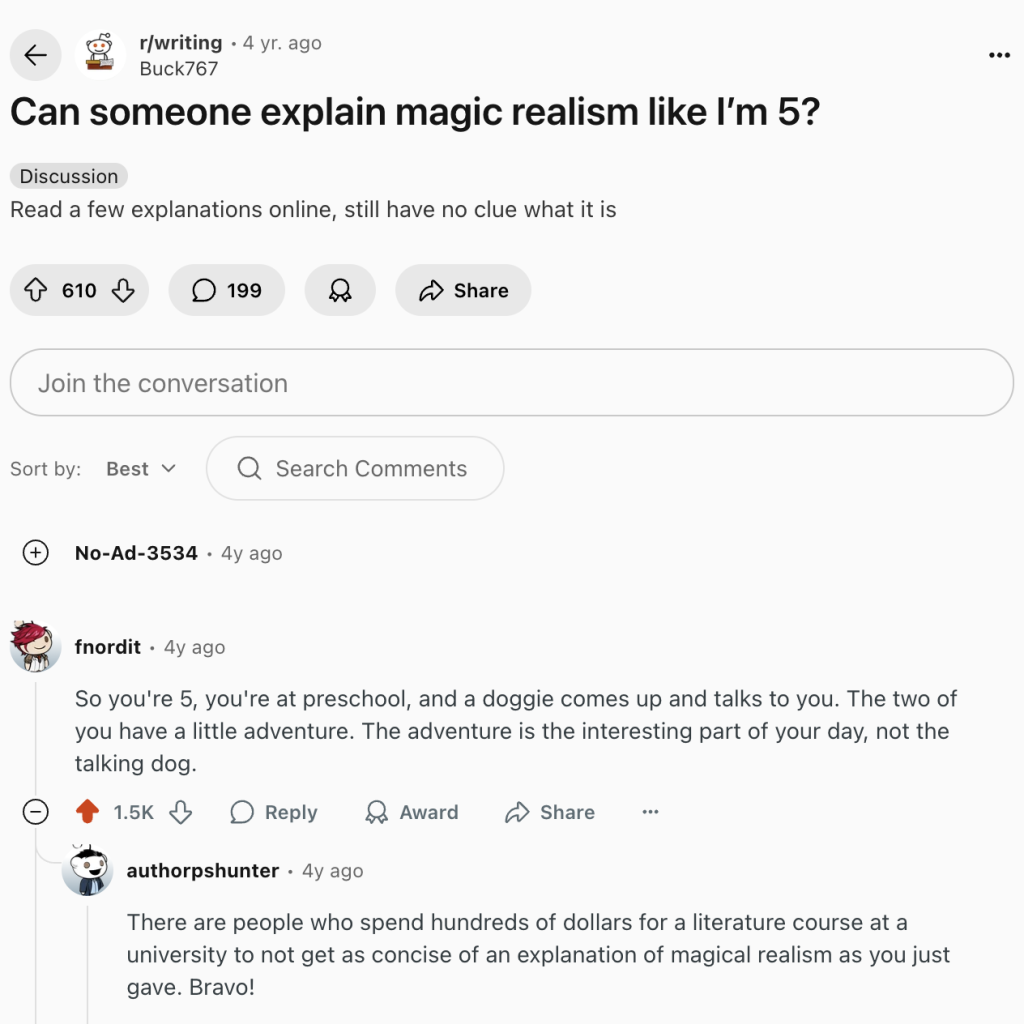
I could spend a lot more time explaining this, but this Redditor understood the assignment perfectly:
How Urban Fantasy Differs
On the other hand, urban fantasy is magical realism’s cool, gritty cousin who wears leather jackets and hangs out in dark alleys with werewolves. It’s fast-paced, set in recognizable urban environments, and magic is an active force in the world.
Urban fantasy generally includes:
- Clear rules for magic.
- Big, obvious paranormal events that drive the plot.
- Secret sorcerous societies, supernatural creatures, and high-stakes quests.
In short, most urban fantasy novels are action thrillers featuring magical elements, characters, and occurrences that are not considered commonplace within the story’s primary urban setting.
Why People Mix Them Up
Both genres weave magic into reality, but they do it differently:
- In magical realism, the ordinary absorbs the extraordinary, making it commonplace.
- In urban fantasy, the extraordinary intrudes into the ordinary, often in highly dramatic ways.
Some books dance between the two—Neil Gaiman’s American Gods flirts with both, for example. However, the core intention is different between the genres. Magical realism leans on metaphor, while urban fantasy prefers action and suspense.
Which is Better?
It’s not about “better,” but personal reader preference.
- Want slow, meaningful stories full of curious beauty and oddball events? Magical realism is likely your jam.
- Want fast-paced, action-filled novels in which magic raises the stakes? Then you’ll want to go with urban fantasy.
Now, the next time you’re browsing the bookstore shelves, you’ll know that magical realism and urban fantasy aren’t the same thing. While they share some mystical DNA, each caters to different tastes and audiences.
And if you’re looking for an urban fantasy series to sink your teeth into, check out my Junkyard Druid and Shadow Changeling series.
Happy reading!
This is so helpful! Thanks for clarifying.
You’re welcome, and I’m glad you found it helpful!